
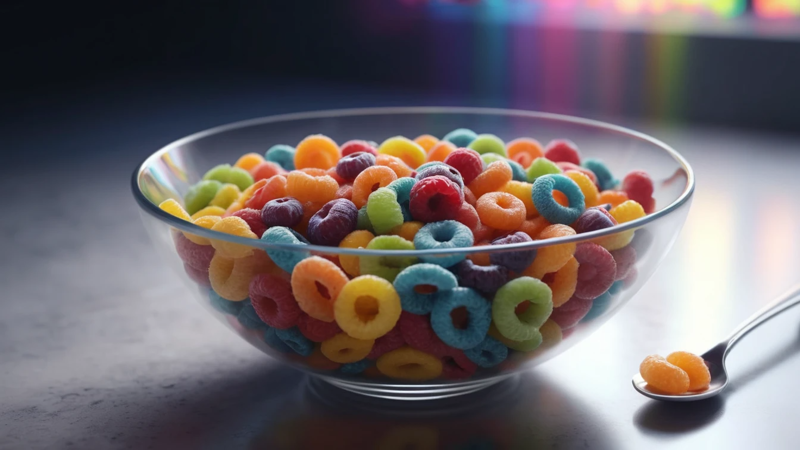
Fruit Loops Mandela Effect explained—why people remember “Froot Loops” wrong and what it says about memory and reality.
The fruit loops mandela effect refers to the widespread false memory where people believe the cereal was once spelled “Fruit Loops” instead of its actual name, “Froot Loops.” This confusion highlights how human memory can be unreliable and easily influenced by patterns, expectations, and shared beliefs.
Fruit Loops Mandela Effect: What’s Really Going On? 🧠
Have you ever felt absolutely sure about something… only to find out you were wrong?
The Fruit Loops Mandela Effect is a perfect example of this strange experience. Many people strongly remember the cereal being spelled “Fruit Loops.” But in reality, it has always been spelled “Froot Loops.” This isn’t a brand change or a hidden rebrand—it’s a shared false memory.
So why do so many people remember it differently? Let’s break it down and uncover what’s really happening.
What Is The Mandela Effect? 🌍
The Mandela Effect happens when a large group of people remembers something incorrectly in the same way. It’s not just a simple mistake. It’s a collective false memory.
The term became popular when many people believed Nelson Mandela died in prison during the 1980s. In reality, he passed away in 2013. This sparked curiosity about how memory works.
Today, the Mandela Effect appears in pop culture, logos, and even famous quotes. It shows that memory is not always reliable. Instead, it can be shaped by suggestion, patterns, and assumptions.
What Is The Fruit Loops Mandela Effect? 🥣
The Fruit Loops Mandela Effect focuses on the cereal brand “Froot Loops.” Many people recall it being spelled the normal way—“Fruit.”
However, the cereal has always been spelled with two “O”s replacing letters. These “O”s are designed to look like colorful cereal loops. That design choice plays a big role in the confusion.
People trust their memory because “fruit” is a real word. So when they see “Froot,” it feels wrong. That mismatch creates a strong illusion of a past change.
Why Do People Remember ‘Fruit’ Instead Of ‘Froot’? 🤔
There’s a simple reason: your brain prefers familiarity. The word “fruit” is common and correct in everyday language.
When people quickly glance at the cereal box, their brain auto-corrects the spelling. Over time, this repeated assumption becomes a memory.
This effect is called cognitive bias. Your brain fills in gaps based on what makes sense. In this case, “fruit” feels more logical than “froot.”
How Branding Tricks Your Brain 🧩
Brands often use creative spelling to stand out. But this can confuse consumers.
“Froot Loops” uses visual design as part of its branding. The “O”s look like cereal pieces. While clever, it makes the word harder to process.
Here’s how branding affects memory:
- It mixes visuals with text
- It breaks standard spelling rules
- It relies on quick recognition
Over time, your brain simplifies the information. That’s when “Froot” turns into “Fruit” in your memory.
The Role Of Visual Memory In This Effect 👁️
Your brain remembers images better than words. This is called visual memory dominance.
When you think of Froot Loops, you likely picture colorful rings. Not the exact spelling. This creates a gap between what you saw and what you remember.
That gap allows your brain to “fix” the spelling. It replaces “Froot” with “Fruit” automatically.
Common Mandela Effect Examples Like Fruit Loops 🔍
The Fruit Loops case is not unique. Many similar examples exist.
Here are a few famous ones:
- “Berenstain Bears” vs “Berenstein Bears”
- “KitKat” vs “Kit-Kat”
- “Febreze” vs “Febreeze”
All of these involve spelling confusion. They follow the same pattern: your brain prefers what looks correct.
How Memory Reconstruction Works 🧠
Memory is not like a recording. It’s more like a puzzle you rebuild each time.
When you recall something, your brain uses bits of information. It fills in missing details using logic and past experience.
This is called memory reconstruction. It explains why people feel confident even when they’re wrong.
Key factors in memory errors:
- Repetition of incorrect info
- Social influence
- Personal assumptions
Psychology Behind False Memories 📚
False memories are a normal part of human thinking. They don’t mean something is wrong with you.
Your brain is designed for efficiency, not accuracy. It prioritizes speed and meaning.
That’s why:
- You remember patterns better than details
- You trust familiar words
- You ignore small inconsistencies
The Fruit Loops Mandela Effect is a perfect example of this process.
Real vs Remembered Versions
| Item | Actual Version | Common Memory |
| Froot Loops | Froot Loops | Fruit Loops |
| Berenstain Bears | Berenstain | Berenstein |
| Febreze | Febreze | Febreeze |
Social Media’s Role In Spreading The Effect 📱
Social media amplifies the Mandela Effect. When people share their memories, others start to agree.
This creates a sense of validation. You think, “If everyone remembers it, it must be true.”
Platforms like Reddit and TikTok fuel these discussions. They turn simple memory errors into viral debates.
Is It Just A Memory Error Or Something More? 👀
Some people believe the Mandela Effect is proof of alternate realities. Others think it’s evidence of timeline shifts.
While interesting, there is no scientific proof for these theories.
Most experts agree it’s a psychological phenomenon. It’s about how memory works—not reality changing.
How Advertising Influences Memory 🛒
Advertising plays a major role in shaping perception. Repetition strengthens memory, even if it’s incorrect.
Brands use:
- Bright colors
- Simple shapes
- Catchy names
Over time, these elements blend together. This makes it easier for your brain to misremember details like spelling.
Factors That Cause Mandela Effects
| Factor | Description |
| Cognitive Bias | Brain prefers familiar patterns |
| Visual Influence | Images override text memory |
| Social Reinforcement | Group agreement strengthens belief |
| Memory Reconstruction | Brain fills missing gaps |
Why The Brain Prefers Simplicity 🧩
Your brain likes shortcuts. It avoids complex or unusual patterns.
“Froot” is unusual. “Fruit” is simple and correct. So your brain replaces it automatically.
This is called mental efficiency. It helps you process information faster but can lead to errors.
Can You Trust Your Memory? 🧠
The short answer: not always.
Memory feels reliable, but it’s often flawed. Even strong memories can be inaccurate.
That doesn’t mean you should distrust everything. It just means being aware of how memory works.
How To Spot A Mandela Effect 🔎
Want to know if something is a Mandela Effect? Look for these signs:
- Many people share the same incorrect memory
- The error feels extremely convincing
- The correct version seems “wrong”
These clues can help you identify similar cases in daily life.
Brain vs Reality Comparison
| Brain Perception | Reality |
| Familiar Words | Actual Branding |
| Logical Spelling | Creative Spelling |
| Group Belief | Verified Facts |
Why The Fruit Loops Case Stands Out ⭐
The Fruit Loops Mandela Effect is one of the most discussed examples online.
It combines visual design, branding, and language. That makes it a perfect case study.
It’s simple, relatable, and surprising. Almost everyone has seen the cereal at some point.
What This Teaches Us About The Brain 🧠
This phenomenon reveals something important: your brain is not perfect.
It’s powerful, but it makes assumptions. It fills gaps. It simplifies reality.
Understanding this can help you think more critically. It also explains why debates like this happen so often.
Conclusion: The Truth Behind The Confusion ✅
The Fruit Loops Mandela Effect is not a mystery of alternate realities. It’s a fascinating example of how human memory works.
People remember “Fruit Loops” because it feels correct. But the real name has always been “Froot Loops.”
This shows that memory is shaped by patterns, visuals, and social influence. The next time you feel certain about something, pause and double-check—you might be experiencing a Mandela Effect too.
FAQs
Why do people remember Fruit Loops wrong?
People remember it as “Fruit” because it’s a real word. The brain prefers familiar spelling. Over time, this assumption becomes a false memory.
Was Froot Loops ever spelled Fruit?
No, it has always been spelled “Froot Loops.” The brand never changed its name. The confusion comes from memory errors.
Is the Mandela Effect real or fake?
The Mandela Effect is real as a psychological phenomenon. It shows how groups can share false memories. It is not proof of alternate realities.
Why does my brain change spellings?
Your brain simplifies information to process it faster. It replaces unusual patterns with familiar ones. This can lead to incorrect recall.
Are there other cereal Mandela Effects?
Yes, many food brands have similar confusion. Logos and spellings often trick memory. These cases follow the same psychological patterns.





Leave a Reply